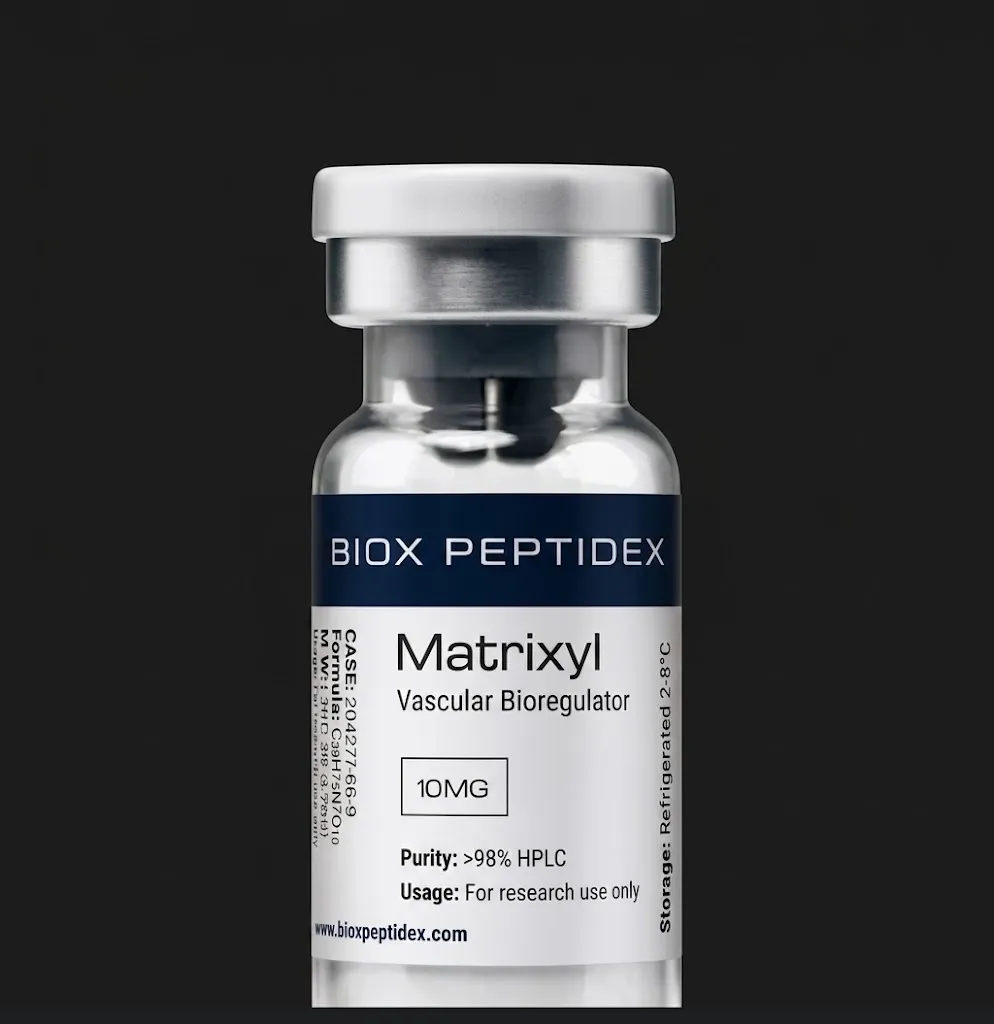
Palmitoyl pentapeptide-4 (Pal-KTTKS, Matrixyl), a matrikine-type signaling cosmetic pentapeptide for research. 10 mg vial. Sequence palmitoyl-Lys-Thr-Thr-Lys-Ser: the 16-carbon palmitoyl chain increases cutaneous penetration.
$612.00
What is Matrixyl 10MG
Matrixyl 10MG is a synthetic lipopeptide extensively studied in cosmetic and dermatological research for its profound ability to stimulate the synthesis of collagen and hyaluronic acid. It is intended exclusively for research use.
Regarding its chemical identity, Matrixyl has a molecular formula of C39H75N7O10 and a molecular weight of 802.0 g/mol. Its reported canonical sequence is Palmitoyl-Lys-Thr-Thr-Lys-Ser (Pal-KTTKS). A confirmed CAS number is not available in open primary reference sources and is therefore omitted.
Its synonyms include Matrixyl.
Product for research use.
Mechanism of action of Matrixyl
Matrixyl acts as a matrikine, a signaling molecule that tells fibroblasts in the skin to increase production of extracellular matrix components, specifically Collagen I, III, IV, and fibronectin. The palmitoyl chain allows the peptide to penetrate the lipid barrier of the stratum corneum.
Pharmacokinetics and pharmacodynamics of Matrixyl
Designed primarily for topical research, the palmitoyl modification significantly increases its lipophilicity, preventing it from being washed away and allowing it to diffuse into the dermis. Systemic absorption is minimal, making it highly targeted to the site of application.
Scientific evidence on Matrixyl
The available evidence on Matrixyl is preliminary and largely inconclusive, and should be interpreted with caution. The literature describes it as having been investigated for multiple indications in preclinical models.
Backed by extensive in vitro and clinical dermatological literature showing a significant reduction in the depth, volume, and density of wrinkles. It is considered one of the most effective non-prescription topical anti-aging compounds.
Matrixyl applications in research
Ideal for (research context):
– In vitro and preclinical studies of its specific receptor pathways.
– Investigation of tissue repair, cell proliferation, and functional restoration in laboratory models.
– Comparative work with related peptides.
Not applicable for:
– clinical, diagnostic or therapeutic use.
– Any administration to humans or animals outside of an authorized research protocol.
Product for research use.
Matrixyl protocols in preclinical studies
The literature consulted does not include numerical doses from studies that can be cited for Matrixyl, so no trial schemes or quantities are specified.
The presentations of this product (10MG) refer only to the amount of lyophilized peptide per vial (or volume for liquids) and do not constitute a dosage recommendation. The design of any protocol, including concentrations and working volumes, is the responsibility of the researcher, based on their experimental objectives and the relevant primary literature.
Information provided exclusively for research purposes.
Reconstitution and manipulation of Matrixyl
As a general guideline for laboratory handling, lyophilized peptides such as Matrixyl are usually reconstituted with bacteriostatic water (sterile water with approximately 0.9% benzyl alcohol).
Add the solvent slowly down the side of the vial, letting it run over the lyophilized powder; avoid injecting the stream directly onto the powder.
Do not shake: gently rotate the vial until completely dissolved.
Adjust the solvent volume according to the desired working concentration, considering the 10MG contents of the vial.
These guidelines are for general technique and do not replace the internal procedures of each laboratory.
Matrixyl Stability and Storage
As a standard laboratory handling procedure for peptides:
Freeze-dried (unreconstituted): This is the most stable form. It is best preserved by freezing and protecting it from moisture and light for long-term storage.
Reconstituted: once in solution, the peptide is less stable and must be kept refrigerated, being used within a short period; for extended storage, freezing in aliquots is usually preferred.
Avoid repeated freeze-thaw cycles, as they can degrade the peptide.
Given that the molecule is characterized by rapid enzymatic degradation in biological media, careful cold chain management is especially relevant.
Documented Matrixyl security profile
The documented safety information in open sources for Matrixyl is limited and should be interpreted with caution, also considering that it is research material and not for clinical use.
Matrixyl is considered extremely safe for topical application, with an excellent tolerability profile. Skin irritation is rare. It lacks the severe redness, peeling, or photosensitivity associated with retinoids.
Formal contraindications and adverse event rates are not available in the consulted literature, so no figures are reported.
Matrixyl in a comparative context
Compared to retinol, Matrixyl provides similar or superior collagen-stimulating benefits without the associated harsh irritation. Compared to GHK-Cu, Matrixyl is strictly a structural stimulator and does not transport copper or modulate broad inflammatory pathways.
History and development of Matrixyl
Developed by Sederma Corporation in France in the early 2000s. Based on a subfragment of the C-terminal propeptide of collagen I, it revolutionized the cosmetic peptide industry and became the gold standard against which other anti-wrinkle peptides are measured.