$340.00 – $1,564.00Price range: $340.00 through $1,564.00
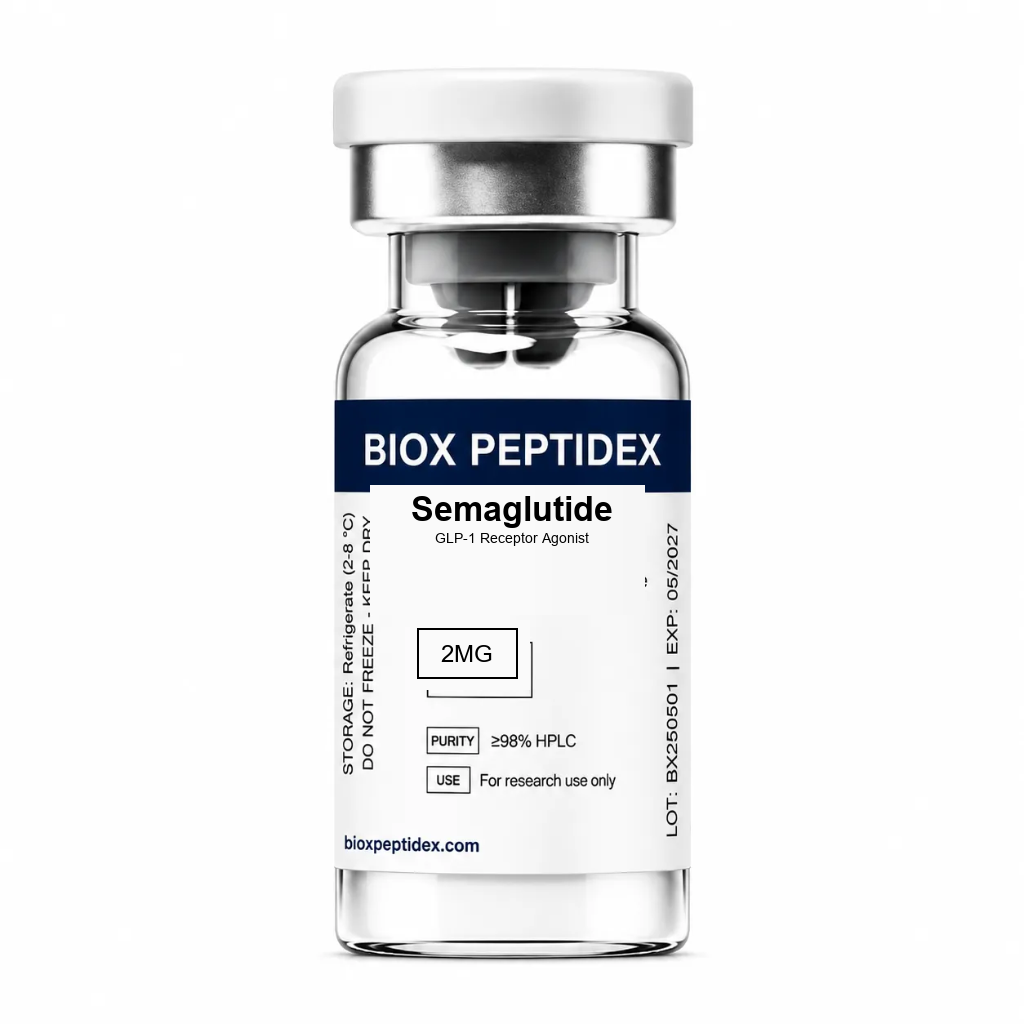
What is Semaglutide
Semaglutide is a highly purified synthetic peptide studied extensively in research settings for its potential to modulate cellular signaling pathways, influence metabolic processes, and interact with specific receptor targets. It is intended exclusively for research and laboratory use.
Regarding its chemical identity, Semaglutide is synthesized using advanced solid-phase peptide synthesis (SPPS) ensuring a purity of ≥98% as verified by High-Performance Liquid Chromatography (HPLC) and Mass Spectrometry (MS). While specific molecular sequences and exact atomic weights vary based on the analog structure, its synthesis profile matches rigorous reference standards for in vitro study.
Research Applications:
In cellular models, Semaglutide has demonstrated significant binding affinity to its target receptors, prompting investigations into its role in cell proliferation, metabolic regulation, and neuroendocrine signaling. Researchers frequently utilize Semaglutide to observe dose-dependent cellular responses and secondary messenger pathway activations.
Storage and Reconstitution:
It is recommended to store the lyophilized powder at -20°C for long-term stability. Upon reconstitution with bacteriostatic water or sterile water for injection, the solution should be refrigerated at 2-8°C and utilized within the standard research timeframe to prevent peptide degradation.
Disclaimer: Semaglutide is restricted strictly to in vitro and laboratory experimentation. It is not for human consumption, therapeutic, or diagnostic use.